
We remember the mornings we felt capable more than the mornings we felt praised.
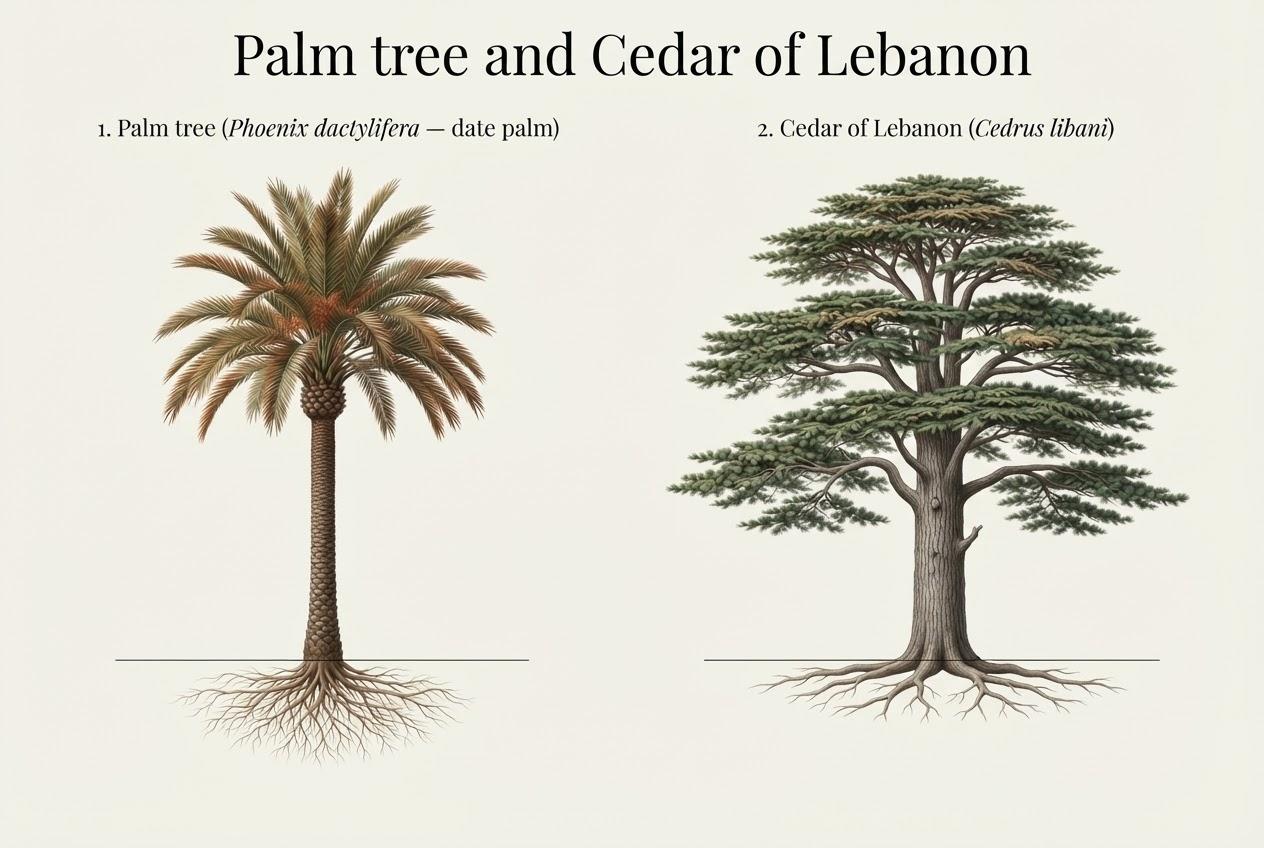
Psalm 92:12 pairs two trees to describe a flourishing life: the palm, known for its fruit, and the cedar, known for its roots. It’s a strange but precise image for how children actually develop — not through one dramatic lesson, but through what gets repeated.
🌴The Palm
What a child does. Brushing teeth, washing hands, dressing themselves, keeping their space in order. Small, visible, repeatable.
🌲The Cedar
What a child becomes. A steady rhythm to mornings, meals, and bedtime that quietly teaches timing, patience, and follow-through.
The CDC has found that something as simple as consistent hand-hygiene routines in schools measurably reduces illness and absenteeism (CDC, 2024). A review of 170 studies found routines are consistently linked to stronger cognitive, emotional, and physical outcomes in children (Selman & Dilworth-Bart, 2024). And the self-regulation built through those early years keeps showing up decades later — in school, relationships, and health (Robson et al., 2020).
Here’s the part worth sitting with: none of this works through pressure or shame. It works through example. Children don’t calibrate to what they’re told — they calibrate to what they watch. A patient, consistent adult is, in effect, the lesson plan.
So the checklist was never just for the child. It was always also for the adult holding it.
“The righteous flourish like the palm tree, and grow like a cedar in Lebanon.”
References
- Centers for Disease Control and Prevention. (2024, October 25). About hand hygiene in schools and early care and education settings.
- Robson, D. A., Allen, M. S., & Howard, S. J. (2020). Self-regulation in childhood as a predictor of future outcomes. Psychological Bulletin, 146(4), 324–354.
- Selman, S. B., & Dilworth-Bart, J. E. (2024). Routines and child development: A systematic review. Journal of Family Theory & Review, 16(2), 272–328.